Athens exhibit highlights damage to Iranian cultural sites
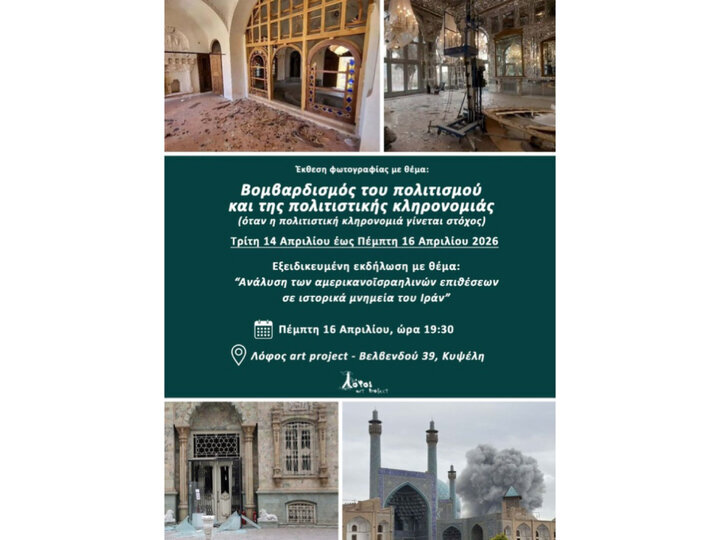
TEHRAN – An exhibition and expert panel held in Athens from April 14 to 16 focused on damage to Iranian cultural and historical sites, with organizers saying the event aimed to raise awareness in Europe about the issue and its broader implications.
According to a statement from Iran’s Ministry of Cultural Heritage, Tourism and Handicrafts, the program combined a photo exhibition titled “bombing of culture and civilization; when destruction targets human heritage” with a panel discussion examining attacks by the United States and Israel on Iranian cultural sites.
The event took place at the Lofos Art Project center in Athens in cooperation with Iran’s cultural office in Greece. Organizers said the initiative sought to address what they described as limited international reactions to damage affecting cultural heritage and to frame the issue as a global ethical concern.
The exhibition featured documentary images of Iranian cultural and historical locations that, according to organizers, were damaged during missile strikes and aerial bombardments attributed to the United States and Israel. The images were presented as evidence of both physical damage and disruption to what organizers described as historical continuity and national identity.
Organizers said the visual presentation was intended to illustrate the broader impact of damage to cultural heritage, describing it as an issue affecting collective memory and shared human history.
The panel discussion was held with participants from fields including philosophy, civilization studies and international law. Speakers addressed legal, cultural and political aspects of the reported damage.
One of participants in the panel, described the destruction of historical sites as “the burning of time,” presenting a philosophical interpretation of the issue and referring to literary traditions in her remarks, according to the statement.
Mohammadreza Bahmani, Iran’s cultural attaché in Greece, said the reported attacks constituted what he called “identity terrorism,” describing them as attempts to erase or alter historical experience. He also criticized what he described as ineffective diplomatic mechanisms and called for broader international efforts to protect cultural heritage.
Another speaker, Eleni Trova, discussed legal aspects, pointing to what she described as gaps in international conventions governing the protection of cultural property. She said the concept of “military necessity” could be used to justify attacks on cultural sites and called for clearer safeguards.
Trova also referred to previous statements by US officials regarding potential targeting of cultural locations, describing this as part of what she called a trend toward normalization of cultural destruction in international relations.
The event was held a city described by organizers as historically significant in the context of global civilization, and was presented as part of broader cultural diplomacy efforts.
In the span of just over a month, from February 28 to April 8, a total of 132 cultural sites, museums, and historical monuments across Iran were damaged or destroyed, largely as a result of the massive shockwaves caused by airstrikes.
AM
Leave a Comment